
iPhone 18: Release Date, Rumours and Apple’s Biggest Brand Shift in Years
Updated 7 September 2026
Apple’s next iPhone event takes place on 9 September, but the biggest story surrounding the iPhone 18 may not be a new camera, chip or colour. Apple appears ready to break apart the annual launch cycle it spent more than a decade teaching the world to anticipate, introduce its first foldable iPhone and do it all during John Ternus’s first major product event as CEO.
Apple has confirmed that its next special event, titled “Surprise and shine”, will take place at Apple Park on Wednesday 9 September 2026 at 10am Pacific Time, or 6pm in the UK. Apple has not officially confirmed which products will appear, but extensive reporting points towards the iPhone 18 Pro and iPhone 18 Pro Max, alongside something considerably more significant: Apple’s first foldable iPhone.
One device conspicuously absent from those expectations is the ordinary iPhone 18. Multiple reports suggest that Apple will hold its mainstream model until spring 2027, splitting its iPhone launches across two parts of the year rather than introducing the core family together in September. The Information first reported plans for the staggered strategy, while subsequent supply-chain comments and industry reporting have reinforced expectations that the standard iPhone 18 will not appear this autumn. If that proves correct, the change may ultimately be more consequential than any individual specification Apple announces this week.
For years, Apple has operated one of the most recognisable rituals in consumer marketing. Autumn arrives, Apple unveils the next numbered iPhone, the technology press descends on Cupertino, pre-orders open and millions of consumers begin making the same familiar calculation about whether this is the year to upgrade. If the reporting around the iPhone 18 is accurate, Apple is preparing to alter that rhythm while simultaneously introducing an entirely new product tier and making the first significant change to the physical architecture of the iPhone in years.
The timing adds another layer of significance. John Ternus formally became Apple CEO on 1 September, succeeding Tim Cook, who moved into the role of executive chairman. The iPhone 18 event will therefore be more than the beginning of another product generation. It will be the first major public product moment of a new leadership era at Apple.
iPhone 18 release date: what do we know so far?
The first important point is that there may no longer be a single iPhone 18 release date. Apple’s event on 9 September 2026 is confirmed, but the products expected to appear are not. Current reporting indicates that Apple will unveil the iPhone 18 Pro, iPhone 18 Pro Max and its first foldable iPhone this September, while the standard iPhone 18, iPhone 18e and potentially the second-generation iPhone Air are widely expected to follow in spring 2027.
That would create a very different annual iPhone calendar. Instead of concentrating the entire family into one major September moment, Apple would effectively divide the range into premium and mainstream launch periods, giving each part of the portfolio more room to establish its own proposition. It would also mean that searches for an “iPhone 18 release date” become more complicated than in previous generations, because different devices carrying the iPhone 18 name could arrive several months apart.
| iPhone 18 information | Current position as of 7 September 2026 |
|---|---|
| Apple launch event | Confirmed: 9 September 2026, 10am PT / 6pm UK |
| iPhone 18 Pro | Expected: September 2026 |
| iPhone 18 Pro Max | Expected: September 2026 |
| Foldable iPhone | Expected: September announcement, exact availability unconfirmed |
| Foldable name | Unconfirmed: “iPhone Ultra” is widely rumoured |
| Standard iPhone 18 | Reported: spring 2027 |
| iPhone 18e | Reported: spring 2027 |
| iPhone Air successor | Reported: spring 2027 |
| A20 / A20 Pro chips | Reported: not confirmed by Apple |
| Pro pricing | Not confirmed |
| Foldable pricing | Reported: expected to exceed $2,000 |
| Pre-order and shipping dates | Not confirmed |
If that reported schedule becomes official, the phrase “iPhone 18 launch” will no longer describe a single moment. Apple will effectively be transforming the iPhone into a product platform with two major annual release windows, which represents a much larger strategic change than it initially appears.
Why would Apple change one of the most successful launch formulas in business?
Apple does not appear to be changing its launch strategy because the existing model has suddenly stopped working. In fact, the opposite is true. Counterpoint Research reported that the iPhone 17 was the world’s best-selling smartphone during the second quarter of 2026, accounting for around 6 per cent of global smartphone unit sales, while the iPhone 17 Pro Max and iPhone 17 Pro occupied the next two positions. Apple also reported record June-quarter iPhone revenue, with iPhone sales reaching approximately $54.25 billion for the period, up 21.7 per cent year on year.
Those results are particularly striking against the wider market. Global smartphone shipments fell 11 per cent year on year during the second quarter of 2026, while Apple continued to grow. The strategic question is therefore not how Apple repairs a declining iPhone business, but why it would interfere with a system that is currently performing so effectively.
One explanation is portfolio complexity. Apple no longer sells an iPhone range built around one or two straightforward choices. The arrival of the e line, Air, Pro, Pro Max and potentially a foldable model creates an increasingly crowded architecture. Asking six devices with very different roles and price points to compete for attention during one keynote risks making those distinctions less clear. A split release schedule would give Apple more space to explain why each part of the range exists, while also creating a stronger product moment during the first half of the calendar year.
There is also a significant communications advantage. September could become the stage for Apple’s most aspirational products, centred on Pro, Pro Max and potentially an Ultra-tier foldable, while spring could become the moment for mainstream devices aimed at the broadest possible market. Rather than weakening the ritual of the iPhone launch, Apple may be creating two versions of it.
The iPhone could be moving from a product ladder to a product architecture
The strategic significance becomes clearer when the iPhone is viewed as a brand architecture rather than a succession of individual devices. For years, Apple used relatively simple segmentation. There was an iPhone, then a larger or more capable version, followed eventually by the distinction between standard and Pro. The hierarchy remained easy to understand, even as the devices became more sophisticated.
That hierarchy is now becoming considerably more nuanced. If the expected 2026 and 2027 range materialises, Apple could offer an entry-level e model, a mainstream numbered iPhone, a thin Air proposition, a Pro, a Pro Max and a new foldable flagship sitting above them all. Each product would serve a different psychological role as well as a functional one. The standard iPhone could remain the default choice, Air could represent design and lightness, Pro could signal capability, Pro Max could combine scale and status, while a foldable device could occupy a new territory built around exclusivity and experimentation.
This is classic brand architecture applied within a single product franchise. The iPhone name provides recognition and trust, while increasingly distinct sub-categories give Apple room to stretch upwards, downwards and sideways without creating an entirely separate masterbrand. The danger is complexity. One of Apple’s historic advantages has been its ability to turn technically complicated categories into relatively straightforward consumer choices. More models create more overlapping propositions, more price steps and more work required to explain why each version exists.
Splitting the launches may therefore be an act of simplification as much as expansion. Apple can increase the number of products while reducing the number of products consumers are asked to think about at any one moment.
Then there is the foldable iPhone
If Apple unveils its first foldable iPhone on 9 September, it will be entering a category that competitors have been developing publicly for years. That is precisely what makes its arrival strategically interesting. Samsung has spent several generations refining foldable devices, while Huawei has pursued the category particularly aggressively and currently holds a dominant position in the Chinese foldable market. Apple would therefore enter not as the inventor of the format, but as a late participant in an increasingly established premium category.
This is not an unfamiliar position for the company. Apple did not invent the MP3 player, smartphone, tablet, smartwatch or wireless earbuds. Its historical skill has often been to allow a category to develop, observe where consumers encounter friction and then create a product and marketing system that makes the category feel more coherent, desirable or mainstream. Whether it can repeat that pattern with foldables is far from guaranteed.
Foldable smartphones have existed for years without becoming the default replacement for the conventional smartphone. They remain expensive, mechanically complicated and difficult for many consumers to justify. Their novelty is obvious, but their necessity is not. Apple therefore has to do more than demonstrate that a folding iPhone can exist. It has to explain why an Apple folding phone should exist now.
Reports suggest Apple has spent many years developing the device and that it could carry a price above $2,000. If accurate, that would make its intended role relatively clear. This is unlikely to be presented as the new default iPhone. It would instead become a halo product designed to stretch both what an iPhone can physically be and how much an iPhone can cost.
Will it really be called iPhone Ultra?
Possibly, but Apple has not confirmed the name. The device has been widely referred to as the iPhone Ultra in recent reporting and rumours, although “iPhone Fold” and other possibilities have also circulated. Until Apple reveals the product, treating Ultra as an official name would be premature, but the naming choice will reveal a great deal about the position Apple intends the device to occupy.
“Fold” describes a mechanism, while “Ultra” describes status. If Apple chooses Ultra, the strategic intention becomes much clearer. The company would not simply be creating a folding version of an existing iPhone, but establishing a new ceiling for the brand. Apple has already taught customers what “Pro” means across its ecosystem. Introducing Ultra above it would create another step in the hierarchy and potentially make the existing $1,000-plus Pro models feel comparatively conventional.
That is one of the less obvious powers of premium brand architecture. A halo product does not need to sell in the greatest volume to influence how the rest of the range is perceived. A $2,000-plus iPhone could reset the psychological reference point against which every other iPhone price is judged.
The iPhone 18 arrives as the smartphone market moves further upmarket
The timing is particularly relevant because premiumisation is already reshaping the smartphone industry. Counterpoint defines premium smartphones as devices with a wholesale price of $600 or more, and in the first half of 2026 that category represented a record 29 per cent of global smartphone sales, up from 25 per cent a year earlier and 20 per cent in the first half of 2022. Apple and Samsung together accounted for the overwhelming majority of those premium sales.
Premiumisation does not simply mean charging more money. It describes a shift in the mix of what a company sells, where consumers are encouraged towards higher-value versions through product differentiation, financing, trade-ins, ecosystem benefits, status and perceived longevity. Apple is exceptionally well placed to exploit that shift because its proposition extends beyond the handset itself. An iPhone can sit inside a much broader relationship involving iCloud, Apple Watch, AirPods, AppleCare, the App Store and other services, meaning an upgrade can strengthen the value of the ecosystem as well as generating hardware revenue.
Apple also reached its highest-ever second-quarter smartphone revenue share in Q2 2026, according to Counterpoint, while largely maintaining pricing as several competitors faced pressure to increase theirs because of component costs. The iPhone 18 generation may now test how far that pricing power can stretch. Pro price increases have been widely predicted, while a foldable device above $2,000 would take Apple into another bracket altogether, although neither the 2026 Pro pricing nor the foldable price has yet been officially confirmed.
Why the ordinary iPhone 18 may be more important than the Pro
There is an interesting contradiction inside Apple’s reported strategy. September is expected to become increasingly premium, yet the strongest-selling device in the current generation is not the Pro Max. It is the standard iPhone 17. Counterpoint says the base iPhone 17 was the world’s best-selling smartphone in both the first and second quarters of 2026, helped by upgrades that narrowed the gap between the standard model and the Pro range.
Moving its successor into spring therefore does not necessarily mean demoting the standard iPhone. It could instead give Apple’s highest-volume product something it has rarely enjoyed: a launch window in which it does not have to compete against the most desirable Pro hardware announced on the same day.
There is a sophisticated marketing logic to that separation. When everything launches together, consumers naturally compare the standard model directly with the Pro. When the launches are several months apart, the comparison set changes. September can be used to make the case for aspiration, performance and premium ownership, while spring can focus on accessibility, value and mass-market relevance. The same portfolio effectively produces two different stories.
For other brands, that is a useful lesson. Product architecture is not only determined by what sits in the range. Timing can materially affect how customers understand hierarchy, value and relevance.
What is actually expected to change on the iPhone 18 Pro?
For all the strategic significance surrounding the launch, the conventional iPhone 18 Pro models are currently expected to remain visually familiar. Rumours point towards an A20 Pro processor, potentially produced using a 2nm manufacturing process, larger batteries, a smaller Dynamic Island created by moving some Face ID hardware beneath the display, and possible changes to the rear camera system including a variable-aperture main camera. None of these specifications has been confirmed by Apple ahead of the event.
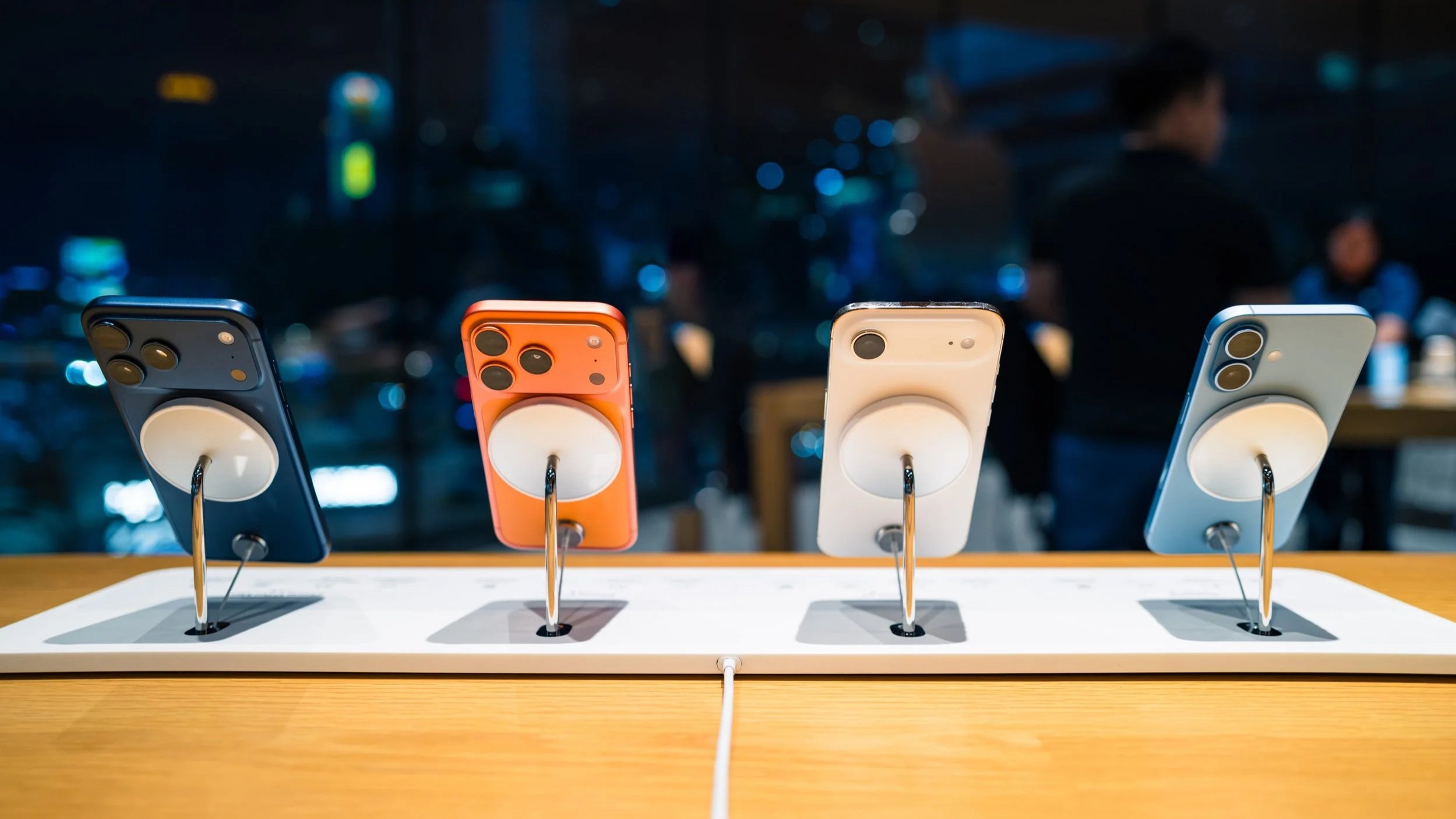
Colour may provide one of the most immediately visible distinctions. Recent component leaks have pointed towards finishes including Silver, Sky Blue and a deep red tone sometimes described as Dark Cherry, although the exact range remains unconfirmed and previous leaks have not always agreed.
Colour can appear superficial beside processors and camera technology, but it has become an extremely efficient part of smartphone marketing. A new finish can make an otherwise evolutionary design instantly identifiable in advertising, retail photography, social content and the hands of early adopters. It allows a consumer to recognise “this year’s iPhone” without requiring Apple to radically redesign a silhouette that already carries enormous equity.
In that sense, colour becomes a temporary distinctive brand asset, giving each generation a visual code while allowing the wider design language to remain consistent.
Familiarity is not the opposite of innovation
Technology companies are frequently judged by how visibly different each new generation looks, but for a mature brand that can be the wrong measure. Apple has invested almost two decades building recognition into the physical language of the iPhone. Rounded forms, camera placement, materials, display treatment, interface behaviour and the overall proportions of the device contribute to recognition before the Apple logo is consciously processed.
Discarding that language every year would destroy some of the equity Apple has spent years building. There is therefore a clear commercial reason for evolutionary design. Familiarity makes the product recognisable, while smaller changes create reasons for renewal without forcing consumers to relearn what an iPhone should look and feel like.
The challenge is managing the boundary between familiarity and stagnation. If each generation becomes too difficult to distinguish, the motivation to upgrade weakens. If it changes too dramatically, Apple risks throwing away valuable recognition. A foldable iPhone potentially allows the company to address both sides of that tension. The Pro models can remain visually familiar while a separate flagship becomes the place where much more radical physical experimentation is permitted.
Instead of asking every iPhone to demonstrate innovation in the same way, different parts of the range can perform different branding jobs.
AI may change what Apple needs the iPhone to communicate
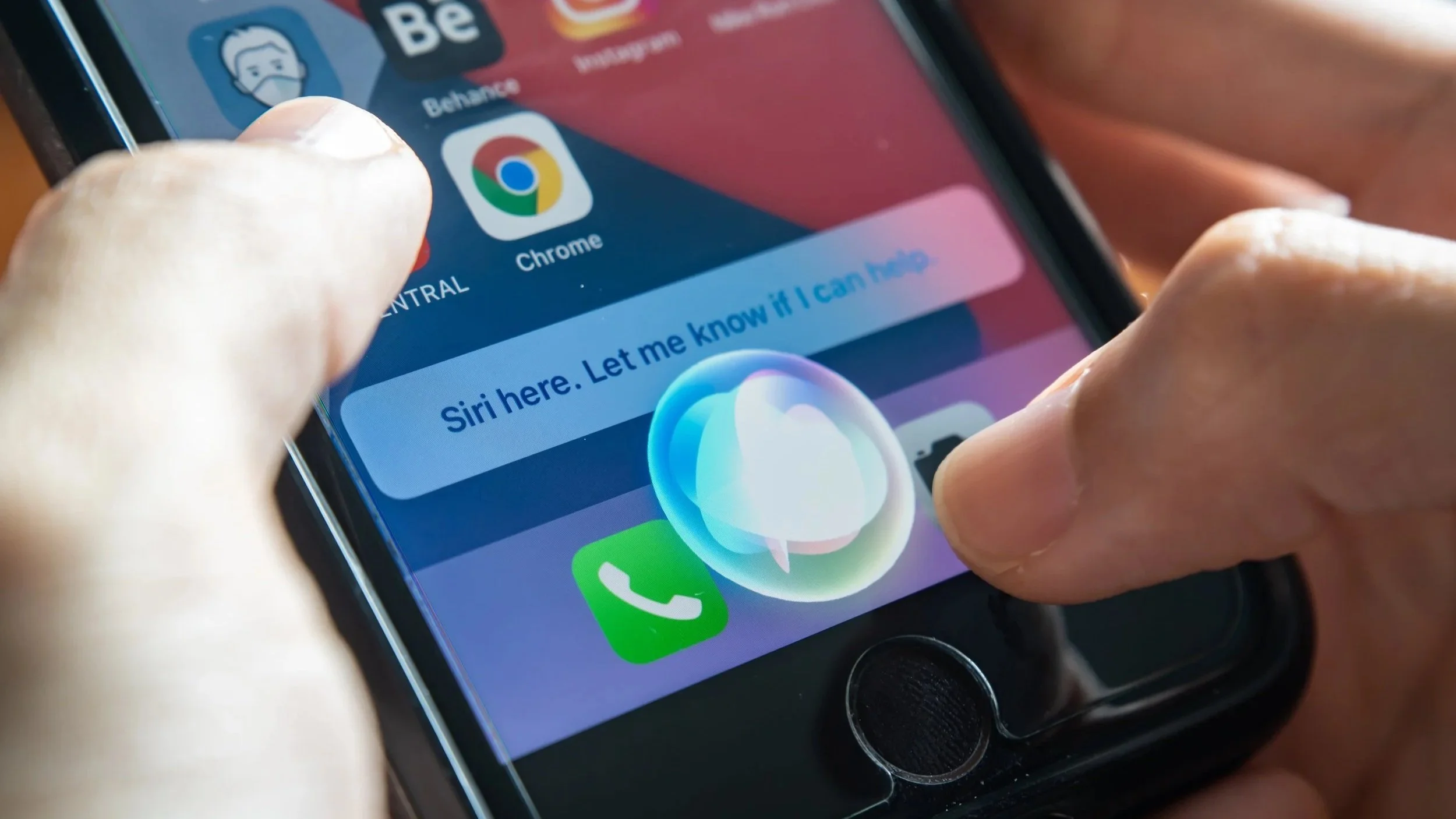
The iPhone 18 is also arriving during a much broader shift in what smartphone companies are trying to sell. At WWDC in June, Apple introduced a new generation of Apple Intelligence alongside Siri AI, describing a system intended to integrate artificial intelligence more deeply across its platforms. Apple has continued to emphasise a combination of on-device processing and Private Cloud Compute, positioning AI as part of the user experience rather than solely as a standalone chatbot.
That distinction is important because AI is rapidly becoming a standard feature at the premium end of the smartphone market. Counterpoint forecasts that generative-AI-capable smartphones will account for a substantial proportion of global shipments in 2026, but AI capabilities have not yet created a consistently compelling reason for consumers to replace otherwise functional devices.
Apple’s marketing challenge is therefore unlikely to be proving that an iPhone contains AI. Consumers increasingly expect that from an expensive smartphone. The harder task is making those capabilities useful and distinctive enough to influence preference.
Apple has traditionally been strongest when it translates engineering into outcomes. A processor becomes better battery life, a sensor becomes a better photograph and security architecture becomes privacy. The question around the iPhone 18 is whether Apple can perform the same translation for AI, making the technology relevant through communication, photography, personal assistance, creativity and everyday tasks rather than simply adding another collection of generative features.
Wednesday’s event should therefore be watched not only for how often Apple talks about artificial intelligence, but for the role AI plays inside the wider product story. If the technology appears primarily through meaningful consumer experiences, Apple will be attempting to turn an increasingly generic technology category back into a recognisably Apple proposition.
John Ternus makes this launch different before it even begins
There is another reason to pay close attention to the language and presentation of the event. For the first time in 15 years, Apple has a new CEO. John Ternus officially succeeded Tim Cook on 1 September 2026 after previously leading Apple’s hardware engineering organisation, while Cook moved into the role of executive chairman. Apple has emphasised Ternus’s hardware knowledge, product focus and engineering background as central to the succession.
The timing could hardly be more symbolic. His first major launch is expected to include the most obvious physical departure from the conventional iPhone in years. That does not mean the foldable device should be described as “Ternus’s iPhone”, because products of this complexity are developed over many years and reports suggest Apple has been working on the format for close to a decade. Nevertheless, public leadership and product narrative are difficult to separate in a company as closely watched as Apple.
The event will inevitably begin shaping what consumers, investors and the media expect the Ternus era to represent. Cook’s Apple became extraordinary at operational scale, services growth, ecosystem expansion and the commercial refinement of product categories established under Steve Jobs. Ternus inherits a company worth trillions while facing a different question about where the next source of consumer excitement will come from.
A new CEO appearing beside a new form of iPhone provides an unusually powerful symbolic starting point, even if the commercial story is far more complex than one keynote.
Apple is entering the foldable market late, and that may be deliberate
Being first is valuable in some categories, but in others the brand that eventually defines the mainstream version of the category can become more influential than the original entrant. Foldables provide an unusually clear example of that distinction.
Huawei, Samsung, Google and other manufacturers have already done much of the work involved in educating consumers about folding smartphones. They have demonstrated both the possibilities and the limitations, from larger screens and multitasking to thickness, durability, visible creases and high prices. Apple has been able to observe those years of experimentation without carrying the full cost of educating the market itself.
That strategy only works if the eventual product feels meaningfully resolved. Entering late with something merely comparable leaves Apple open to the obvious criticism that competitors arrived years earlier. The pressure on a foldable iPhone is therefore much higher than the pressure surrounding an ordinary annual update.
Apple does not have to demonstrate that a folding smartphone can exist. Samsung and Huawei have already done that. It has to explain why an Apple folding phone should exist now, and why consumers who have ignored the category until this point should suddenly reconsider it.
The answer will not be found in the hinge alone. It will depend on the relationship between hardware, software, interface, applications, ecosystem integration and positioning. If Apple manages to create that coherence, entering late may look disciplined. If it cannot, the delay may simply make the company appear late.
The real product Apple sells every September is attention
There is a reason an iPhone launch still matters beyond Apple’s market share. Apple has turned the launch itself into a global media system. Before the keynote there are leaks, rumours, analyst forecasts, supply-chain reports and speculation about the invitation. The invitation becomes content in its own right, the date becomes news and the event produces another cycle of reporting. Hands-on impressions follow, then reviews, pre-orders, delivery photographs, comparisons, advertising, retail displays and months of debate around whether people should upgrade.
Apple buys advertising, but a remarkable amount of the iPhone’s communications infrastructure exists outside its direct media spend. The world discusses the product on Apple’s behalf, and that is an asset built over decades rather than a trick created by a single campaign.
Very few companies can announce the date for an event concerning products they have not yet publicly acknowledged and immediately generate global press coverage. The “Surprise and shine” invitation demonstrates the strength of that system. Apple has officially disclosed relatively little about the September products, yet the event itself has already become a significant part of the launch narrative.
This is what marketers often miss when attempting to replicate Apple’s ability to generate hype. Anticipation is not a campaign tactic that can simply be switched on. It is the accumulated result of repeatedly creating products, moments and cultural relevance that make audiences believe the next announcement may be worth their time. Apple has effectively earned the privilege of withholding information.
There is also a danger in becoming too good at anticipation
The same media system creates its own problems because Apple launches are now so comprehensively leaked that genuine surprise becomes increasingly difficult. Days before the event, publications are already discussing possible processors, colours, dimensions, camera changes, product names, pricing and launch schedules.
Apple therefore operates in an unusual environment where it may officially announce a product to an audience that believes it already understands much of what is coming. That changes the purpose of the keynote. The role of the event is no longer simply to reveal information. It is to interpret it.
Apple has to take a collection of specifications that may already be circulating publicly and explain what they mean, how they fit together and why consumers should care. That remains one of the company’s greatest communications strengths. Competitors, analysts and leakers may reveal technical information in advance, but Apple still controls the final narrative around how those individual features should be understood.
The most successful Apple launches are therefore less about surprise than meaning. The product may be known, but the proposition still has to be constructed.
China makes the foldable decision particularly important
There is also a harder commercial reality behind the design story. China remains one of the most important and competitive premium smartphone markets in the world, with Huawei having rebuilt considerable strength and established an especially powerful position in foldable devices. Current reporting places Huawei well ahead of Apple in China’s foldable category, while competition across the broader high-end smartphone market continues to intensify.
More broadly, Apple remains dominant in premium smartphones globally, but its share of that segment has declined from the unusually high levels it enjoyed several years ago as Chinese manufacturers strengthen their flagship products. The significance of a foldable iPhone therefore extends beyond design experimentation. It would give Apple a direct entrant into a premium category where several Chinese competitors have already built credibility, while simultaneously creating a new halo product for the wider global market.
That creates both an opportunity and a risk. If Apple can persuade consumers that it has solved the category more elegantly than existing players, its late arrival may reinforce the company’s reputation for disciplined product development. If the device offers too little differentiation, competitors will have a strong argument that Apple is following rather than leading.
The China context makes that distinction commercially important rather than merely rhetorical.
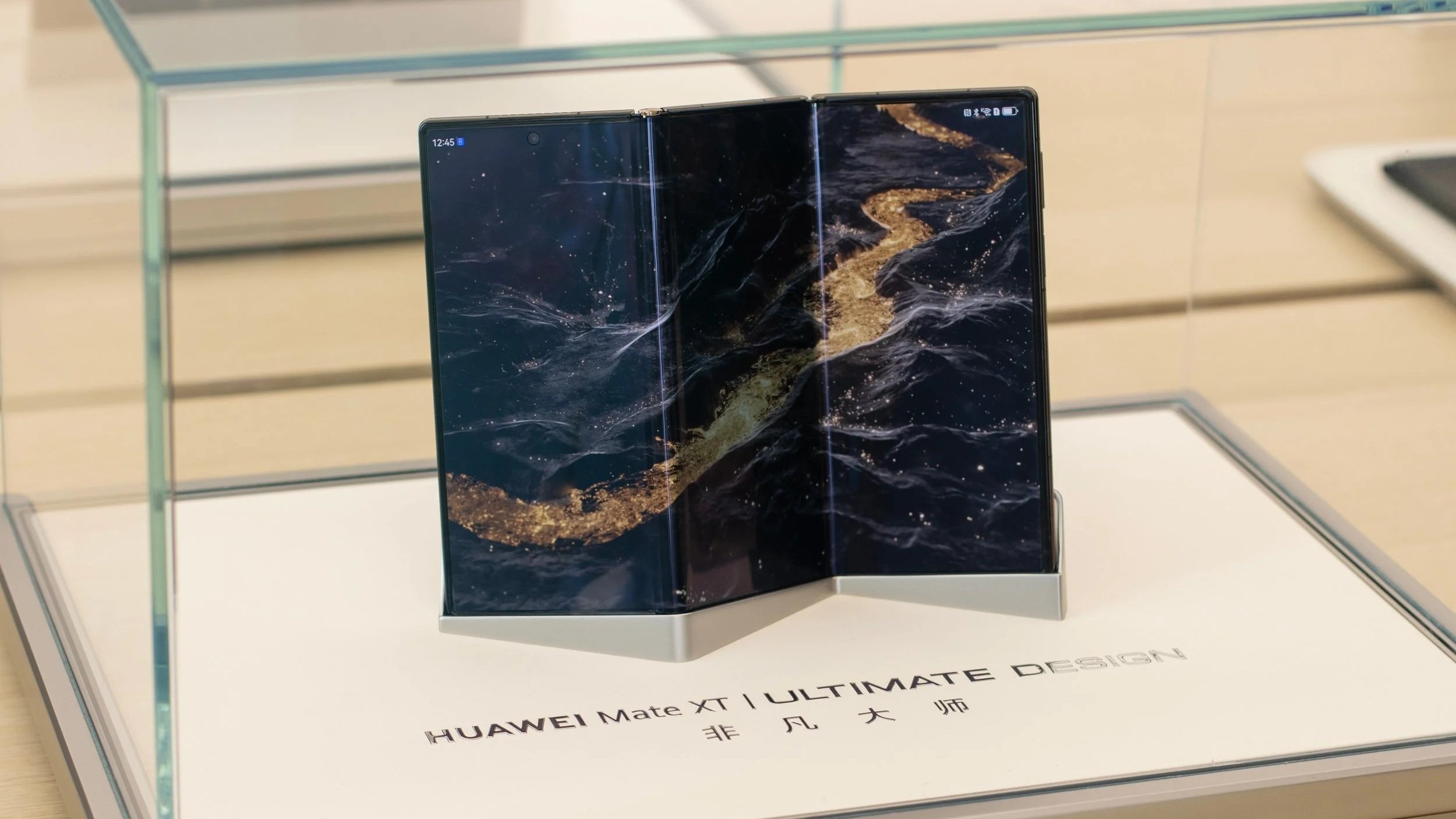
Huawei Mate XT Ultimate Design tri-fold screen smartphone
What other brands can actually learn from the iPhone 18 strategy
The useful lesson from Apple is not that every business should create artificial scarcity, stage theatrical keynotes or divide its products into Pro and Ultra versions. Those are outputs of a particular brand system, and copying them without the system itself produces imitation rather than strategy.
The more valuable lesson is that portfolio design and communications design can be treated as the same problem. If Apple splits the iPhone range across autumn and spring, it is changing more than a production calendar. It is giving different products clearer space to communicate different propositions. Timing becomes part of the brand architecture, allowing premium products and mainstream products to tell different stories without diluting one another.
There is also a lesson in preserving recognition. Mature brands do not need to redesign everything in order to demonstrate progress. Distinctive assets become more valuable through repetition, and the strategic skill lies in understanding which elements should remain stable and where novelty will create the greatest effect.
The potential foldable iPhone demonstrates a further principle. A brand does not necessarily need to invent a category in order to define its eventual mainstream meaning. Late entry can be powerful when the delay allows a company to solve unresolved problems, bring an existing audience into the category and frame the product differently. The trade-off is that the longer the delay, the greater the expectation that the finished product will justify the wait.
Finally, there is the value of building an ecosystem of attention rather than a succession of campaigns. Apple’s extraordinary level of launch coverage was not created by this year’s event invitation. It has accumulated through decades of expectation. Brands seeking the same effect need to ask a more difficult question than how to generate hype. They need to understand why an audience should care about what they do next.
Is the iPhone 18 the beginning of a new Apple?
Two days before the event, it would be premature to treat rumour as a strategy already executed, but several unusual developments are converging at the same time. Apple has a new CEO for the first time since 2011. It is widely expected to reveal its first foldable iPhone. The standard iPhone 18 is reportedly moving outside the traditional September launch window. The iPhone range is becoming broader and more segmented, while artificial intelligence is changing the role of the smartphone and premium devices are accounting for an increasing share of value in a difficult global market.
None of those changes exists entirely in isolation. Together, they suggest that the most important question surrounding the iPhone 18 may not be whether the next Pro model has a better camera or whether a new processor delivers another incremental performance improvement. The bigger question is whether Apple is beginning to redesign the commercial and communications system around its most important product family.
For more than a decade, September has carried a remarkably simple consumer meaning: the new iPhone arrives. If Apple now changes that rhythm, it will be changing a behaviour it spent years creating. That makes the 9 September event worth watching for something larger than the next specification sheet. It may reveal what Apple wants the iPhone to become in the next phase of the brand.
Frequently asked questions about the iPhone 18
When is the iPhone 18 coming out?
Apple has confirmed a special event for 9 September 2026, when the iPhone 18 Pro and iPhone 18 Pro Max are widely expected to be announced. Current reporting suggests that the standard iPhone 18 will not launch until spring 2027, meaning this generation may be released across two separate windows rather than through one traditional September launch.
Is the iPhone 18 launching in September 2026?
The complete range is not expected to launch together. The iPhone 18 Pro and Pro Max are widely reported to be arriving in September 2026, potentially alongside Apple’s first foldable iPhone, while the standard iPhone 18 and other mainstream models are currently expected to follow in spring 2027.
When is the Apple iPhone event in the UK?
Apple’s “Surprise and shine” event takes place on Wednesday 9 September 2026 at 6pm UK time. The event begins at 10am Pacific Time in California and will be streamed online by Apple.
Is Apple releasing a foldable iPhone?
Apple has not formally announced a foldable iPhone, but extensive reporting indicates that its first folding model could be unveiled during the September 2026 event. Current reports describe a book-style device that opens into a larger tablet-like display, although the final design and availability remain unconfirmed.
Will the foldable iPhone be called iPhone Ultra?
The name remains unconfirmed. “iPhone Ultra” has been widely used in recent reporting and rumours, but Apple could choose another name entirely. Until the company officially unveils the product, Ultra should be treated as a possible branding direction rather than an established product name.
How much will the foldable iPhone cost?
Apple has announced no official pricing. Current reporting suggests the first foldable iPhone could cost more than $2,000, which would place it comfortably above the existing Pro Max and make it the most expensive iPhone Apple has launched. Exact US and UK pricing will only become clear if Apple confirms the device.
What is new about the iPhone 18 Pro?
Reported changes include a next-generation A20 Pro processor, larger batteries, a smaller Dynamic Island and possible changes to the main camera system, including variable-aperture technology. New finishes have also been rumoured. Apple has not confirmed these features ahead of the 9 September event.
Why is Apple reportedly changing the iPhone release schedule?
The most likely explanation is that Apple’s expanding product range has become too broad to communicate effectively through one annual launch. Moving mainstream devices to spring could give premium and more accessible models separate marketing windows, reduce competition between products and create two major annual iPhone moments instead of one.
Who is Apple’s CEO for the iPhone 18 launch?
John Ternus became Apple CEO on 1 September 2026, succeeding Tim Cook, who moved into the role of executive chairman. The September iPhone event will therefore be Ternus’s first major product launch as chief executive.