
Best Branding Agencies for
Technology Companies in 2026
Finding the right branding agency for a technology company is rarely just a question of choosing the studio with the strongest-looking portfolio. Technology businesses have to explain products that may be unfamiliar, technically complex or still creating their own category, while convincing customers, investors and employees that the company behind them can be trusted to deliver.
The best technology branding agencies combine brand strategy and creative thinking with an ability to understand the product underneath the proposition. Some are particularly strong at translating complex B2B technology. Others excel at transforming global technology brands, connecting brand with digital product experience or building distinctive identities for fast-growing consumer platforms.
For our 2026 Technology ranking, About That Brand has assessed agencies with substantial experience across artificial intelligence, SaaS, software, fintech, cybersecurity, developer tools, enterprise technology and other innovation-led businesses. The result is not simply a list of famous agencies, but a guide to which firms are strongest for different types of technology company and different stages of growth.
Last reviewed: 24 August 2026
• 10 agencies selected
• Specialisms considered: AI, SaaS, software, fintech, cybersecurity, developer tools, digital platforms, enterprise technology and deep tech
[Explore our full ranking methodology]
What are the best branding agencies for technology companies?
Our leading branding agencies for technology companies in 2026 are Pentagram, Wolff Olins, Koto, Phable, Clay, Ragged Edge, Ramotion, Siegel+Gale, COLLINS and DesignStudio.
There is no single agency that will be the best choice for every technology company. Pentagram combines exceptional design with substantial experience across emerging and established technology brands. Wolff Olins is particularly strong when a large technology business is undergoing organisational change. Koto has become one of the most prominent agencies for contemporary digital and technology brands, while Phable specialises specifically in technically complex startups and growth companies. Clay and Ramotion bring branding particularly close to the product and digital experience, while agencies including Siegel+Gale are better suited to large enterprise organisations where complexity, architecture and clarity become significant parts of the brief.
The best technology branding agencies at a glance
| Rank | Agency | Best for | Most suitable stage | Technology strengths |
|---|---|---|---|---|
| 1 | Pentagram | Exceptional creative identity for ambitious technology brands | Scaleup to enterprise | AI, deep tech, digital products, infrastructure |
| 2 | Wolff Olins | Major technology brand transformation | Scaleup to enterprise | Platforms, mobility, digital services, global technology |
| 3 | Koto | Contemporary digital-first technology brands | Growth to enterprise | AI, software, platforms, consumer technology |
| 4 | Phable | Complex technology companies that need greater clarity | Startup to scaleup | AI, SaaS, DevOps, data, cybersecurity, deep tech |
| 5 | Clay | Connecting brand, website and digital product | Startup to enterprise | SaaS, fintech, AI, digital products |
| 6 | Ragged Edge | Challenger technology and fintech brands | Scaleup | Fintech, digital platforms, software |
| 7 | Ramotion | Product-led B2B technology companies | Startup to scaleup | SaaS, AI, cybersecurity, fintech, developer tools |
| 8 | Siegel+Gale | Simplifying complex enterprise technology | Enterprise | Cloud, software, semiconductors, IT services |
| 9 | COLLINS | Category-defining technology brands | Scaleup to enterprise | AI, SaaS, platforms, digital products |
| 10 | DesignStudio | Technology platforms becoming mainstream brands | Scaleup to enterprise | Platforms, digital products, consumer technology |
The Top 10 Branding Agencies for Technology Companies
1. Pentagram
Best for: Ambitious technology companies where exceptional creative design is a priority
Ideal stage: Scaleup to enterprise
Core strengths: Brand strategy, visual identity, digital experience, verbal identity and design systems
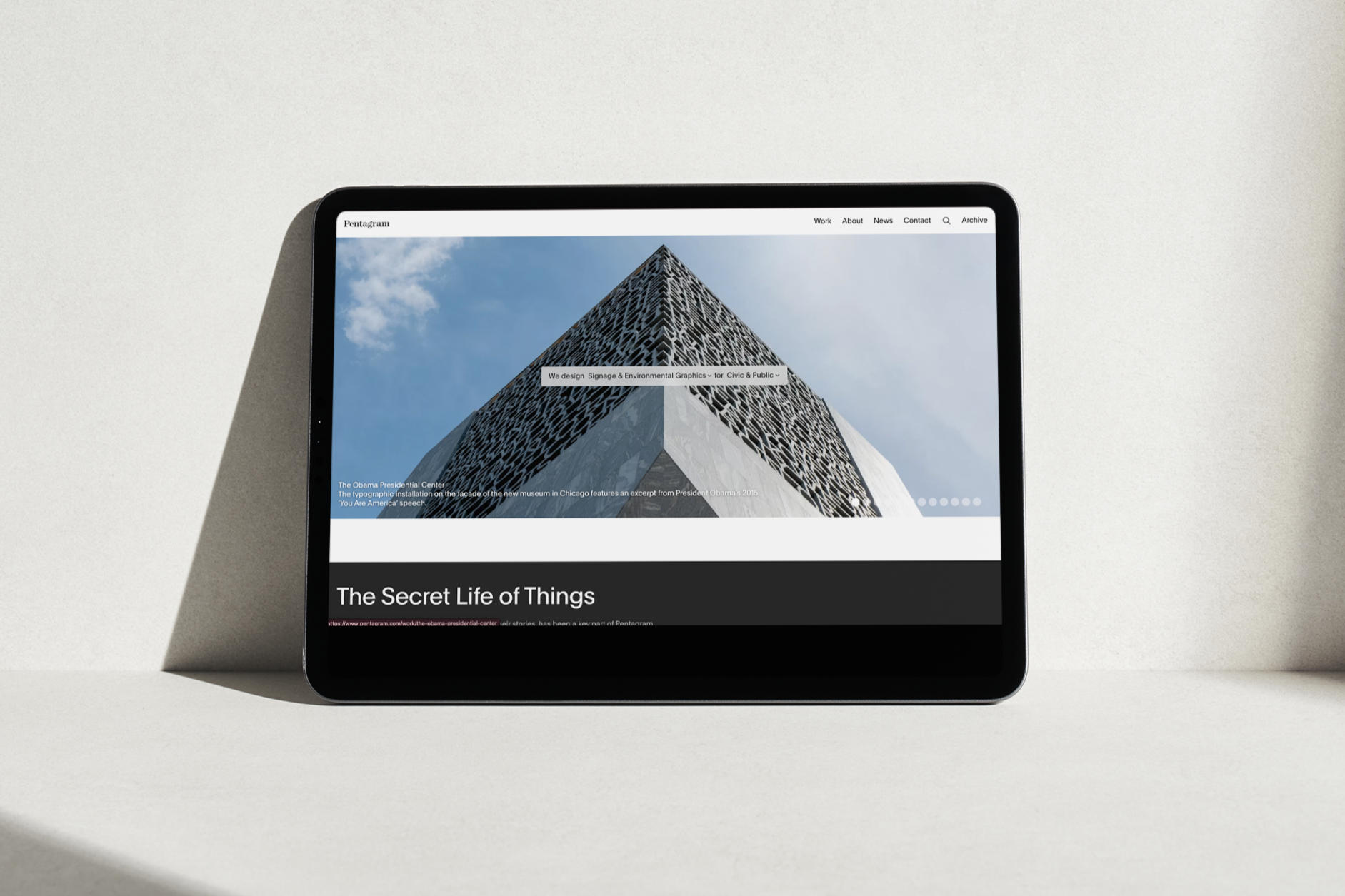
Pentagram takes first place because technology is not an occasional category within its portfolio. The independent design partnership has developed branding across artificial intelligence, robotics, cybersecurity, payments, data infrastructure, software and emerging technology, with recent and historic work ranging from AI companies such as Abridge, Pienso and TwelveLabs to PayPal, Reddit, Intrinsic, Graphcore, MIND and Isomorphic Labs. Its technology portfolio now extends across dozens of projects.
What makes Pentagram particularly strong is its ability to find a visual idea in the technology itself without allowing the resulting brand to become dependent on familiar technology clichés. Its work for machine-learning hardware company Graphcore, for example, combined strategy, tone of voice, visual identity and a generative pattern system, while its work for Alphabet robotics company Intrinsic translated an abstract software proposition into a dynamic identity built around the idea of prescience.
Pentagram is most compelling for companies that have the ambition and resources to make design an important part of their market position. It may be more agency than an early-stage startup needs, particularly where the immediate problem is founder positioning or early go-to-market messaging rather than a sophisticated identity system. For funded technology businesses and established organisations seeking genuinely distinctive creative work, however, it remains difficult to beat.
Who should shortlist Pentagram? Technology scaleups, established AI businesses, major digital platforms and companies for which design excellence is central to the brief.
2. Wolff Olins
Best for: Technology companies undergoing major business and brand transformation
Ideal stage: Scaleup to enterprise
Core strengths: Brand strategy, architecture, organisational change, verbal identity, culture and digital experience
Wolff Olins is at its strongest when branding is part of a much larger change in the company. Its work with Uber illustrates the point. The consultancy's relationship with the technology platform extended across brand strategy, architecture, visual and verbal identity, employer brand, culture and digital experience as Uber moved from ride-hailing app towards a broader mobility ecosystem.
That ability to work above the level of a visual rebrand makes Wolff Olins particularly relevant to technology companies that have outgrown the proposition around which they were originally built. Product portfolios may have expanded, acquisitions may have complicated the architecture or the business may be moving from a successful product towards a much broader platform. In those circumstances, the identity is only one part of the problem.
The agency has a long history of working with disruptive and technology-enabled organisations and continues to publish thinking around how AI and emerging technology are changing customer experience and brand.
For a small technology startup looking to launch quickly, this level of organisational consulting may be unnecessary. For a company approaching an IPO, moving into new markets, redefining its category or attempting to align an increasingly complicated global business, Wolff Olins is one of the strongest agencies in the market.
Who should shortlist Wolff Olins? Large technology scaleups, global platforms and enterprise organisations where brand transformation is closely connected to business transformation.
3. Koto
Best for: Modern, digital-first technology brands with international ambitions
Ideal stage: Growth company to enterprise
Core strengths: Strategy, brand systems, identity, campaigns, motion and digital experience
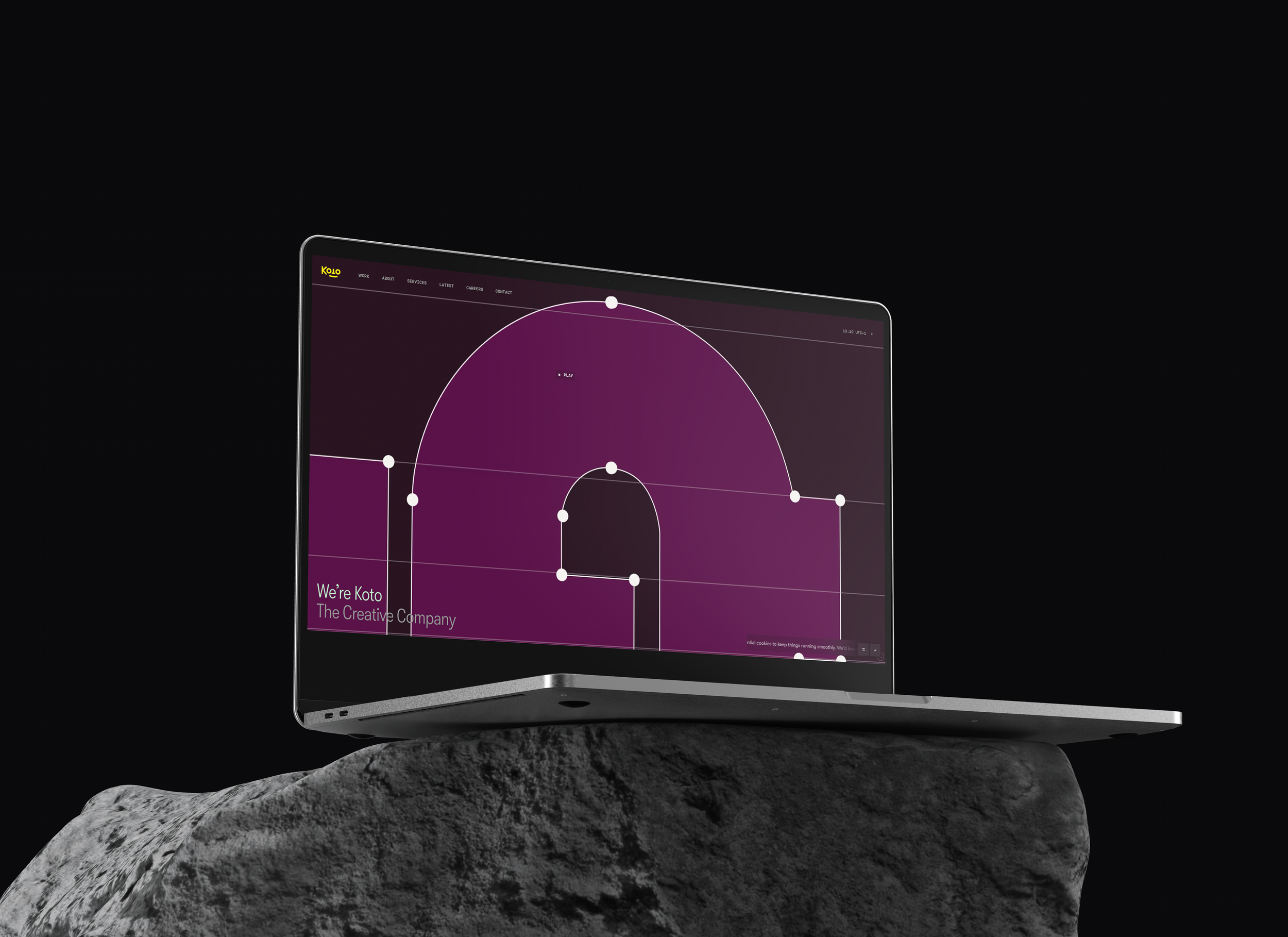
Koto has developed one of the most convincing contemporary technology portfolios among the newer generation of international brand agencies. Its work includes Microsoft Copilot, Stack Overflow, Workday, Microsoft Security, Coinbase, WhatsApp and other technology and digital businesses, alongside longer-term partnerships with Microsoft and Google.
Its Microsoft Copilot+PC work is particularly indicative of Koto's strength. Rather than presenting artificial intelligence as an abstract technical concept, the project was designed around communicating what the technology could make possible in everyday computing. The studio's broader technology experience ranges from software and workplace platforms through to payments, AI and connected devices.
Koto is particularly effective for companies that need a brand to feel native to contemporary digital culture without becoming visually interchangeable with the rest of the technology sector. Its systems tend to be expressive, adaptable and designed to move across digital environments, campaigns and product-adjacent experiences.
A deeply technical B2B startup whose main problem is articulating an unfamiliar product may want a more specialist technology consultancy at an earlier stage. A well-funded scaleup or established digital company seeking a sophisticated international brand system should place Koto high on its shortlist.
Who should shortlist Koto? Fast-growing software companies, consumer technology brands, AI businesses, platforms and international scaleups.
4. Phable
Best for: Technically complex companies that need to become easier to understand
Ideal stage: Startup to scaleup
Core strengths: Positioning, messaging, brand identity, websites, content and technology storytelling
Phable is more specialised than most of the agencies in this ranking. Rather than serving technology as one industry among many, the agency focuses on technology companies and works across artificial intelligence, SaaS, DevOps, infrastructure, cloud, data, fintech, cybersecurity, climate technology and other technically complex categories.
That specialisation changes the starting point of the branding process. The problem for many emerging technology businesses is not that their logo is weak, but that the market does not quickly understand what the company has built, why it is different or why that difference matters. Phable's work therefore connects product understanding with positioning, messaging, identity and the content required to take that proposition to market.
Its portfolio includes work with AI and software businesses such as ViSense, Appsurify, Virtuoso and Wakeline; developer and DevOps brands including Bubbly and Verifa; and projects involving organisations such as GitHub, Citrix, Eficode and Substack. Its work with Bubbly, for example, began with understanding the tool's place within CI/CD workflows before developing the visual identity, while projects for AI businesses such as Appsurify and Virtuoso combine technical credibility with a more distinctive market presence.
Phable is particularly relevant when founders or technical teams are struggling to translate the sophistication of a product into a compelling commercial story. Larger global organisations requiring extensive research teams, international rollout and complex corporate governance may instead benefit from a larger consultancy.
Who should shortlist Phable? AI startups, SaaS companies, developer tools, cybersecurity businesses, infrastructure companies and technically complex B2B technology scaleups.
5. Clay
Best for: Technology businesses where the brand and digital product need to work as one system
Ideal stage: Startup to enterprise
Core strengths: Branding, digital products, UX/UI, websites and design systems
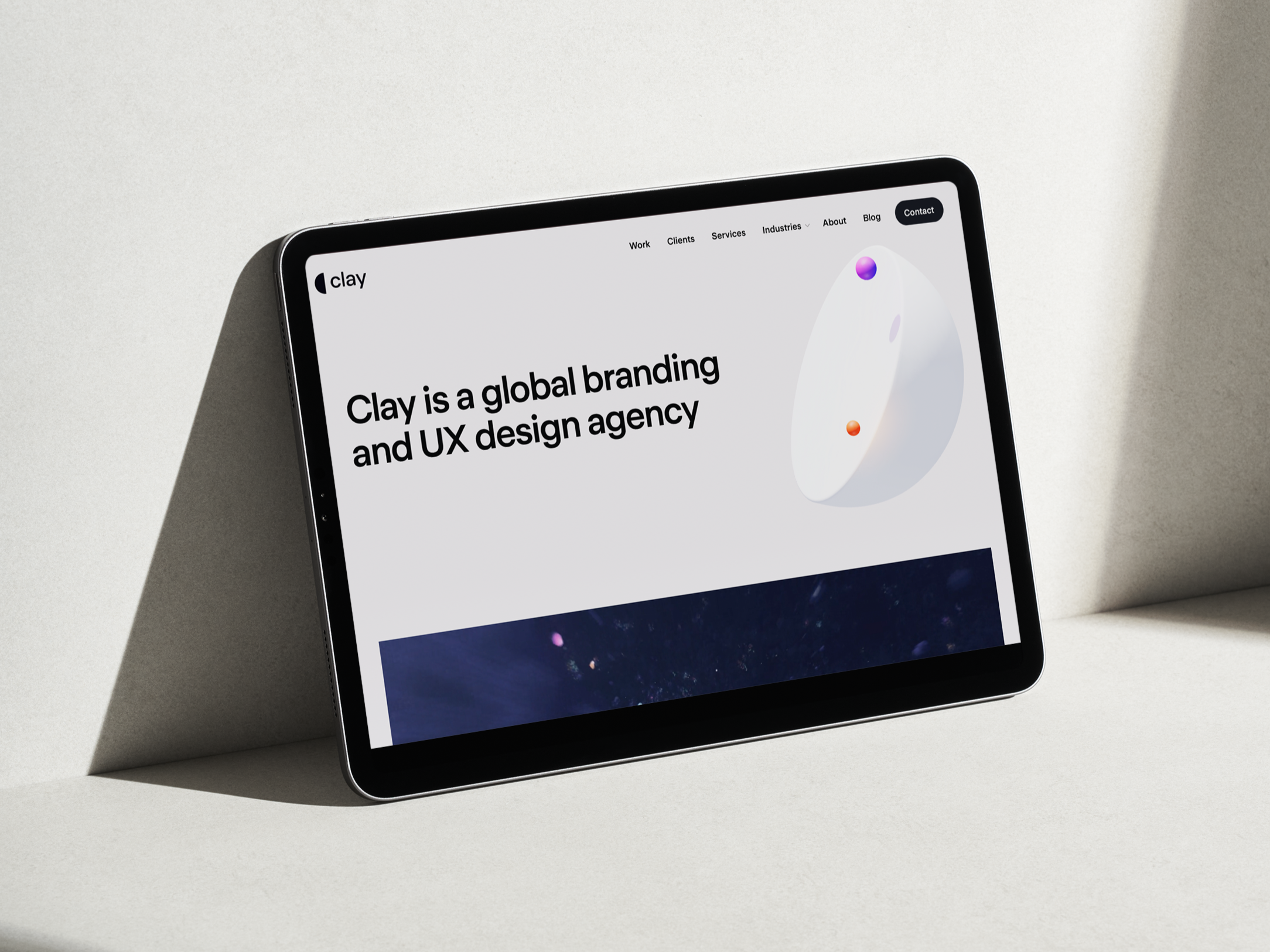
San Francisco-based Clay occupies a particularly useful position between branding agency and digital product studio. Its portfolio spans brand identity, websites and product design for technology businesses across SaaS, fintech, AI and enterprise software, including work involving Stripe, Meta, Google, Interos, Streetbeat, Marqeta and other digital businesses.
That makes Clay especially relevant to companies whose customer experience happens primarily inside software. A technology business can create an impressive marketing identity only for that personality to disappear as soon as someone signs into the platform. Clay's experience with digital products allows the brand system, website, interface and broader user experience to be considered together.
Its work includes branding for AI-powered investment platform Streetbeat, brand and web work for SaaS risk-management platform Interos and extensive fintech experience across digital banking, investment and payments.
Companies primarily looking for verbal strategy, corporate positioning or complex organisational brand architecture may find more suitable specialists elsewhere on this list. For businesses where digital interaction is inseparable from the brand itself, Clay is one of the strongest options.
Who should shortlist Clay? SaaS platforms, fintech businesses, product-led startups and technology companies undertaking brand and digital-product work simultaneously.
6. Ragged Edge
Best for: Challenger technology and fintech brands that need a stronger point of view
Ideal stage: Scaleup
Core strengths: Positioning, identity, verbal expression, brand systems and distinctive creative direction
Ragged Edge has built its reputation around brands that are prepared to take a position rather than simply look polished. That approach is particularly valuable in parts of the technology sector where companies can become almost indistinguishable through similar language, layouts and visual conventions.
Its work with Wise is a strong example. Ragged Edge created a global rebrand designed to support the company's move beyond international transfers towards a much broader financial proposition, with the system ultimately launching across 175 countries. The agency subsequently developed the Wise Platform sub-brand for a B2B audience of banks and large enterprises.
Ragged Edge has also worked with Monzo to develop an identity system capable of operating both inside and outside the digital product, as well as working with technology-related businesses including Granola and other fast-growing digital challengers.
The studio is an especially interesting option for a technology company whose category has become visually and verbally predictable. It is less obviously positioned as a technical B2B specialist, so businesses selling highly complex infrastructure or engineering products may prefer an agency with deeper expertise in those fields.
Who should shortlist Ragged Edge? Fintechs, consumer technology companies, software challengers and scaleups that want to build a more opinionated category position.
7. Ramotion
Best for: B2B software and technology companies combining branding with website or product design
Ideal stage: Startup to scaleup
Core strengths: Branding, web design, UX/UI, SaaS, AI and cybersecurity
Ramotion has one of the broadest specialist technology portfolios in this ranking. Its work is organised directly around categories including artificial intelligence, B2B, SaaS, fintech, cybersecurity, IoT and developer tools, with projects involving businesses such as Firefox, Salesforce, Citrix, Stripe, Descript, Okta, Flatfile, Murf AI and Cypress.
Particularly notable is the breadth of its SaaS and security work. The agency publishes dedicated portfolios across both categories, ranging from work for enterprise technology companies to fast-growing software startups. Its AI portfolio includes Descript, Murf AI, MetaSpark and Borea AI, while its cybersecurity experience includes Okta, Citrix, Island, Cellebrite, Flatfile and Cycode.
Ramotion therefore becomes particularly useful when a brand project needs to continue directly into the website or product experience. It is a practical choice for product-led technology organisations that do not want strategy, identity and UX to become separate disciplines handled by unrelated suppliers.
Companies looking for high-level global corporate transformation may find the large consultancies elsewhere in this ranking more appropriate. For B2B SaaS, AI, cybersecurity and developer-focused businesses, Ramotion has unusually deep sector evidence.
Who should shortlist Ramotion? SaaS businesses, AI products, cybersecurity companies, developer tools and product-led B2B technology startups.
8. Siegel+Gale
Best for: Enterprise technology companies that need to make complexity clearer
Ideal stage: Enterprise
Core strengths: Brand strategy, architecture, naming, identity and simplification
Siegel+Gale has long built its proposition around simplicity, which is particularly valuable in enterprise technology. Large software and infrastructure companies tend to accumulate products, acquisitions, terminology and internal complexity over time, eventually making the company harder for customers to understand than the technology itself.
The agency has a dedicated technology practice and substantial work in the sector. Its relationship with SAP has included portfolio strategy and brand work designed to communicate a growing cloud offer more coherently, while other case studies include UST, DXC Technology, Cloudreach, SADA, semiconductor company Marvell and Micron.
This makes Siegel+Gale particularly strong when the challenge concerns positioning and architecture across an already substantial organisation. Its work for UST, for example, addressed the difficulty of moving perceptions beyond traditional IT services, while the Micron identity had to communicate the company's role in technologies spanning AI data centres, mobile devices and smart manufacturing.
An early-stage startup is unlikely to require this scale of brand consultancy. An established software, semiconductor, cloud or IT organisation trying to simplify a complicated portfolio should consider it seriously.
Who should shortlist Siegel+Gale? Enterprise software businesses, cloud companies, semiconductor businesses, technology-services organisations and companies with complex portfolios.
9. COLLINS
Best for: Technology brands seeking a powerful category position and high creative distinctiveness
Ideal stage: Scaleup to enterprise
Core strengths: Positioning, brand transformation, identity systems and category creation
COLLINS approaches branding with an unusually strong emphasis on business and category transformation. Its technology work spans brands including Spotify, Dropbox, Figma, Facebook's early AI work, YouTube Gaming and, more recently, AI-powered IT platform Atera.
Atera is particularly relevant to the current technology market. Rather than positioning the company around another collection of AI features, COLLINS worked to move it beyond the conventional managed-services software category and towards a broader position around AI-powered IT. The project brought together customer and executive research, positioning, narrative and a new identity system.
The agency's earlier work with Figma similarly demonstrates its ability to identify a larger market story around a technology product. Rather than framing Figma solely as a tool for designers, the narrative expanded the perceived audience towards the wider group of people involved in creating digital products.
COLLINS is therefore particularly compelling when the ambition is larger than making a technology company look more contemporary. It is a strong choice for businesses attempting to redefine what category they belong to, expand the audience for an established product or build a much more distinctive cultural position.
Who should shortlist COLLINS? Ambitious technology scaleups, AI businesses, digital platforms and product companies trying to reshape their category.
10. DesignStudio
Best for: Digital platforms making the transition from technology product to mainstream brand
Ideal stage: Scaleup to enterprise
Core strengths: Brand strategy, visual identity, digital experience and global brand systems
DesignStudio has a history of helping technology-enabled businesses move beyond the identity of a functional product and towards something people form a stronger emotional relationship with. Its most famous example remains Airbnb, where the agency helped develop the wider idea of belonging and worked directly with the business to translate the new brand into its technology and digital experience.
That kind of challenge is common among successful technology scaleups. Early branding is often centred on explaining what the product does. As the business grows, functionality is no longer enough to hold together the audience, culture, product range and international ambitions of the company. The brand has to become a broader organising idea.
DesignStudio is therefore most relevant once a technology business has already established product-market fit and is beginning to ask a larger question about how it should be understood. Smaller companies whose principal problem remains technical positioning or early commercial clarity may achieve more from a specialist startup agency.
Who should shortlist DesignStudio? Consumer platforms, marketplaces, digital services and scaleups attempting to build a globally recognisable brand.
What is a technology branding agency?
A technology branding agency helps technology companies define how their business is understood, communicated and recognised. Its work can include research, positioning, proposition development, messaging, naming, verbal identity, visual identity, website design, brand architecture, digital experience and the systems required to apply the brand consistently as the company grows.
The distinction between a general branding agency and a technology specialist is usually found in the nature of the problem being solved. Technology companies frequently sell products that are difficult to understand without technical knowledge, particularly in artificial intelligence, cybersecurity, cloud infrastructure, developer tools and deep tech. The agency therefore needs to understand enough about the product, market and customer to simplify the proposition without making it inaccurate.
Good technology branding is not about making a company look more technological. In many cases, the opposite is true. The strongest brands move away from predictable imagery and language around innovation, connectivity, intelligence and transformation to find something much more specific that competitors cannot easily claim.
Why is branding different for technology companies?
Technology products can change considerably faster than the brands surrounding them. New functionality is released, business models evolve, competitors adopt similar features and terminology that once sounded distinctive can become generic within months. A technology brand built entirely around the current product therefore risks becoming outdated as the company grows.
The audience is also unusually complicated. A B2B software company might need to communicate with developers, procurement teams, chief technology officers, investors and non-technical chief executives, each of whom requires a different level of explanation. A consumer technology company may face the opposite problem: the engineering can be extraordinarily sophisticated, but none of that complexity should be visible to the person using the product.
The best technology branding agencies understand this tension. They create a simple enough idea to travel across audiences without stripping away the substance that makes the company credible.
Best Technology Branding Agencies by Specialism
Best branding agencies for AI companies
Artificial intelligence has quickly become one of the most crowded branding categories in technology. Companies routinely make similar claims around automation, intelligence, agents, productivity and transformation, while visual identities frequently fall back on gradients, abstract networks and futuristic imagery.
For complex or early-stage AI businesses, Phable is particularly strong because its work starts with understanding and explaining the technology itself. Ramotion combines substantial AI experience with web and product design, making it useful for product-led AI platforms. Koto is an excellent option for larger AI businesses where the technology needs to become a recognisable consumer or enterprise brand, while Pentagram offers exceptional creative depth for ambitious AI and deep-tech organisations seeking a highly distinctive identity.
Best branding agencies for SaaS companies
SaaS is one of the sectors most vulnerable to brand sameness. Product screenshots, bold sans-serif typography, abstract illustration and almost identical promises of speed, simplicity and productivity can make competing companies difficult to distinguish.
Ramotion has particularly extensive evidence across SaaS, B2B software and developer tools. Clay is strong where the brand needs to operate seamlessly between marketing and the software product itself, while Phable is particularly appropriate for B2B SaaS companies struggling to explain a technically complicated proposition. Koto becomes a strong option as a software company moves towards scale and needs a more expansive international brand system.
Best branding agencies for fintech companies
Financial technology has to manage two competing expectations. The company needs enough energy and innovation to challenge established financial institutions, while simultaneously creating the trust expected from a business handling money, data or major financial decisions.
Ragged Edge is one of the standout agencies in the category because of its work with Wise and Monzo. Clay combines fintech branding with substantial digital-product experience, while Ramotion has a broad portfolio across payments, financial platforms and digital services. Larger international fintech businesses considering major corporate transformation should also look at agencies such as Wolff Olins and Siegel+Gale.
Best branding agencies for cybersecurity companies
Cybersecurity companies face an especially difficult communication problem. Their products are technically complex, the buyer may range from security engineers to the boardroom, and much of the category still communicates through fear, threat imagery and technical terminology.
Ramotion has one of the clearest dedicated cybersecurity portfolios in this ranking, with experience spanning Okta, Citrix, Island, Cellebrite, Flatfile and Cycode. Phable is particularly relevant to emerging cybersecurity and infrastructure businesses where technical understanding and proposition development are central to the brief. Siegel+Gale is better suited to established enterprise organisations where architecture and simplification become more significant.
Best branding agencies for deep-tech companies
Deep-tech branding requires an agency to work with products that may be based on scientific or engineering breakthroughs unfamiliar to almost everyone outside the specialist field. The challenge is not simply making the company more accessible. The brand must simplify without undermining the technical credibility on which the business depends.
Pentagram has particularly strong work across AI hardware, robotics, digital biology and emerging technology. Phable is relevant for founder-led deep-tech businesses where complex products need to become understandable to investors and commercial audiences, while Koto becomes compelling for well-funded businesses looking to develop a more expansive global brand around emerging technology.
Best branding agencies for enterprise technology
Enterprise technology branding is often as much an organisational exercise as a creative one. Years of product development, acquisitions and international expansion can leave companies with overlapping product names, complicated architecture and inconsistent messaging.
Wolff Olins is one of the strongest options when the brand needs to change alongside the organisation itself. Siegel+Gale offers particular strength in simplifying complicated technology propositions and portfolios, while Pentagram becomes compelling where an enterprise organisation also places exceptional creative quality at the centre of the brief.
Best Technology Branding Agencies by Company Stage
Best branding agencies for technology startups
Startups normally need clarity before scale. The initial branding challenge is often to establish exactly what the company should stand for, which parts of the product matter most to customers and how a relatively unknown business can make its proposition immediately understandable.
For technically complex startups, Phable and Ramotion are particularly relevant because both work extensively with emerging technology businesses and can carry branding into websites and wider digital communication. Clay is worth considering where the product experience itself forms a large part of the brief.
A startup should not assume that hiring the largest agency available will produce the strongest outcome. A smaller specialist team working directly with the founders can often be more appropriate when the business and proposition are still changing.
Best branding agencies for technology scaleups
Scaleups tend to encounter a different set of problems. The original brand may have been effective enough to launch the business, but the company has since acquired new customers, products, employees and markets. What once felt focused begins to constrain what the company is becoming.
Koto, Ragged Edge, COLLINS and Clay are particularly compelling at this point. Each offers the ability to create a more expansive brand system without losing the energy of a growth company. Wolff Olins becomes increasingly relevant as organisational complexity and international scale increase.
Best branding agencies for enterprise technology companies
For enterprise businesses, changing a brand can affect thousands of employees, numerous products, international markets and a large network of customer touchpoints. Research, governance, architecture and implementation become just as important as the identity itself.
Wolff Olins and Siegel+Gale stand out for this kind of transformation, while Pentagram offers exceptional creative expertise where identity and design carry particular strategic importance. Large organisations should prioritise experience handling complexity rather than choosing an agency solely because its previous work looks appealing.
How much does a technology branding agency cost?
The cost of hiring a technology branding agency depends heavily on the size of the business and the scope of the problem. A founder-led startup requiring positioning, messaging and a visual identity is commissioning a fundamentally different project from a global software company restructuring dozens of products across multiple markets.
Published pricing remains relatively uncommon among established agencies. As a broad market guide, substantial branding projects typically move into five-figure budgets, while comprehensive scaleup rebrands involving research, positioning, messaging, visual identity and a new digital presence can readily reach six figures. Global enterprise transformation programmes involving multiple markets, extensive research, brand architecture and implementation can cost significantly more.
Technology companies should therefore compare the scope behind agency proposals rather than simply comparing the headline price. A proposal for visual identity alone is not directly comparable with one that includes market research, positioning, naming, messaging, website strategy and organisational rollout.
How to choose the right technology branding agency
Begin with the reason you are looking for an agency. If customers struggle to understand the product, prioritise positioning, proposition and messaging. If the company has grown successfully but the identity no longer represents its ambition, creative quality and brand-system design may become more important. If the greatest inconsistency exists between the marketing brand and the software itself, look closely at agencies with genuine digital-product capability.
Relevant technology experience also deserves closer examination. Do not judge it simply by the presence of familiar logos on an agency's client page. Find out what the agency actually did. A global technology company may have hired one studio to create an entire brand strategy and another to design a small campaign asset. Both can technically claim the client, but the experience is not equivalent.
The company's stage matters just as much. Startups benefit from agencies comfortable working directly with founders and making decisions while the business is still moving quickly. Enterprise companies require stronger governance, stakeholder management and the ability to implement systems across large organisations.
Finally, evaluate whether the agency appears genuinely interested in understanding the technology. A strong branding partner should be capable of asking difficult questions about the product, customer and category before deciding how the company should look.
Questions to ask before hiring a technology branding agency
When interviewing agencies, ask them to explain how they will learn about the product and market before beginning creative work. Find out who will actually work on the account, whether the senior people involved in the pitch remain involved after appointment and which parts of the project will be completed internally rather than outsourced.
It is also worth establishing exactly what the term "strategy" includes. Some agencies use it to mean a lightweight creative framework, while others undertake customer research, competitive analysis, positioning, portfolio strategy and substantial messaging work before any visual design begins.
If the company operates a software product, ask how the new brand will translate into UX and UI. If it sells through long B2B buying cycles, ask how positioning will extend into sales content and product communication. If rapid growth is expected, ask how the identity system will accommodate products, acquisitions and new markets that do not yet exist.
The strongest agency should not simply produce the best answer to the brief you wrote. It should help determine whether you are asking the right question in the first place.
How About That Brand Ranks Technology Branding Agencies
The agencies in this guide are assessed using About That Brand's established independent ranking methodology. We consider the quality and relevance of published work, strategic capability, creative execution, evidence of technology-sector expertise and the kinds of organisations for which an agency is most appropriate.
Industry rankings are not based simply on the size or fame of an agency. A consultancy can rank highly on our global list while being less suitable for a particular technology brief than a smaller specialist. The purpose of these rankings is therefore not only to identify strong agencies, but to help companies understand where their particular strengths lie.
Any commercial relationship that could reasonably affect the independence of a recommendation should be disclosed alongside the relevant listing.
Frequently Asked Questions About Technology Branding Agencies
-
Pentagram is About That Brand's highest-ranked technology branding agency for 2026 because of the breadth and quality of its work across AI, software, robotics, infrastructure and digital products. Wolff Olins ranks highly for major technology brand transformation, Koto for contemporary digital-first brands, Phable for complex startups and scaleups, and Clay for projects combining brand with digital-product experience. The best agency for an individual company ultimately depends on its stage, sector, budget and specific branding challenge.
-
A technology branding agency helps technology companies determine how they should be understood and recognised. Services can include research, brand strategy, positioning, messaging, naming, verbal identity, visual identity, website design, product design, brand architecture and ongoing communications.
-
For an early-stage AI company with a technically complex proposition, Phable is one of the strongest specialist choices because of its focus on AI, software and emerging technology. Ramotion is particularly relevant where branding also needs to extend into the website and product, while larger AI businesses may consider Koto or Pentagram.
-
Ramotion, Clay and Phable are particularly strong choices for SaaS businesses. Ramotion has extensive SaaS and developer-tool experience, Clay is strong where brand and digital product need to work together, and Phable specialises in translating technically complicated B2B software into clearer positioning and messaging.
-
Ragged Edge, Clay and Ramotion have particularly relevant fintech experience. Ragged Edge's work includes Wise and Monzo, while Clay and Ramotion both combine financial-technology branding with substantial digital-product expertise.
-
Not always. A company with a straightforward proposition may benefit more from exceptional general branding expertise than narrow sector specialisation. Specialist technology experience becomes particularly valuable when the product is technically complicated, the category is unfamiliar or the agency needs to communicate effectively with developers, technical buyers and commercial decision-makers at the same time.
-
Common triggers include moving into a new market, raising significant investment, moving from startup to scaleup, targeting enterprise customers, introducing new products, completing acquisitions or reaching a point where the company's existing story no longer accurately describes the business. Persistent confusion about what the company does can itself be a strong indication that positioning and branding need attention.
-
A focused startup branding project may take several weeks, while a comprehensive programme involving research, strategy, messaging, visual identity and a website will commonly take several months. Large enterprise transformations involving multiple stakeholder groups, products and international markets can take significantly longer.
-
Look beyond aesthetics. Compare each agency's relevant technology work, the actual scope of those projects, strategic capability, senior-team involvement, product understanding, digital expertise and experience with companies at your stage. The best agency is the one whose strengths most closely match the business problem you need to solve, not necessarily the most famous name on the shortlist.
About This Ranking
Last researched: 24 August 2026
Ranking: Best Branding Agencies for Technology Companies in 2026
Reviewed categories: AI, SaaS, software, fintech, cybersecurity, developer tools, digital platforms, enterprise technology and deep tech
Review approach: Editorial assessment using the About That Brand agency ranking methodology
About That Brand reviews its agency rankings periodically as portfolios, teams, specialist expertise and the wider branding market change. Inclusion in this guide should not be interpreted as a guarantee of suitability for every company or project.
Find the guide that fits your brief
Technology is a broad category. If your brief sits within software, financial technology or AI, use the relevant guide to compare agencies in that context.
SaaS branding agencies · Fintech branding agencies · AI branding agencies
Ready to approach a shortlist? Our guide to choosing a branding agency includes a brief outline, evidence checks and a proposal comparison worksheet.
For more specific technical briefs, explore B2B and enterprise software, cybersecurity, cloud and developer tools, or data and analytics.
Browse all branding agencies by industry for more sector-specific guidance.