
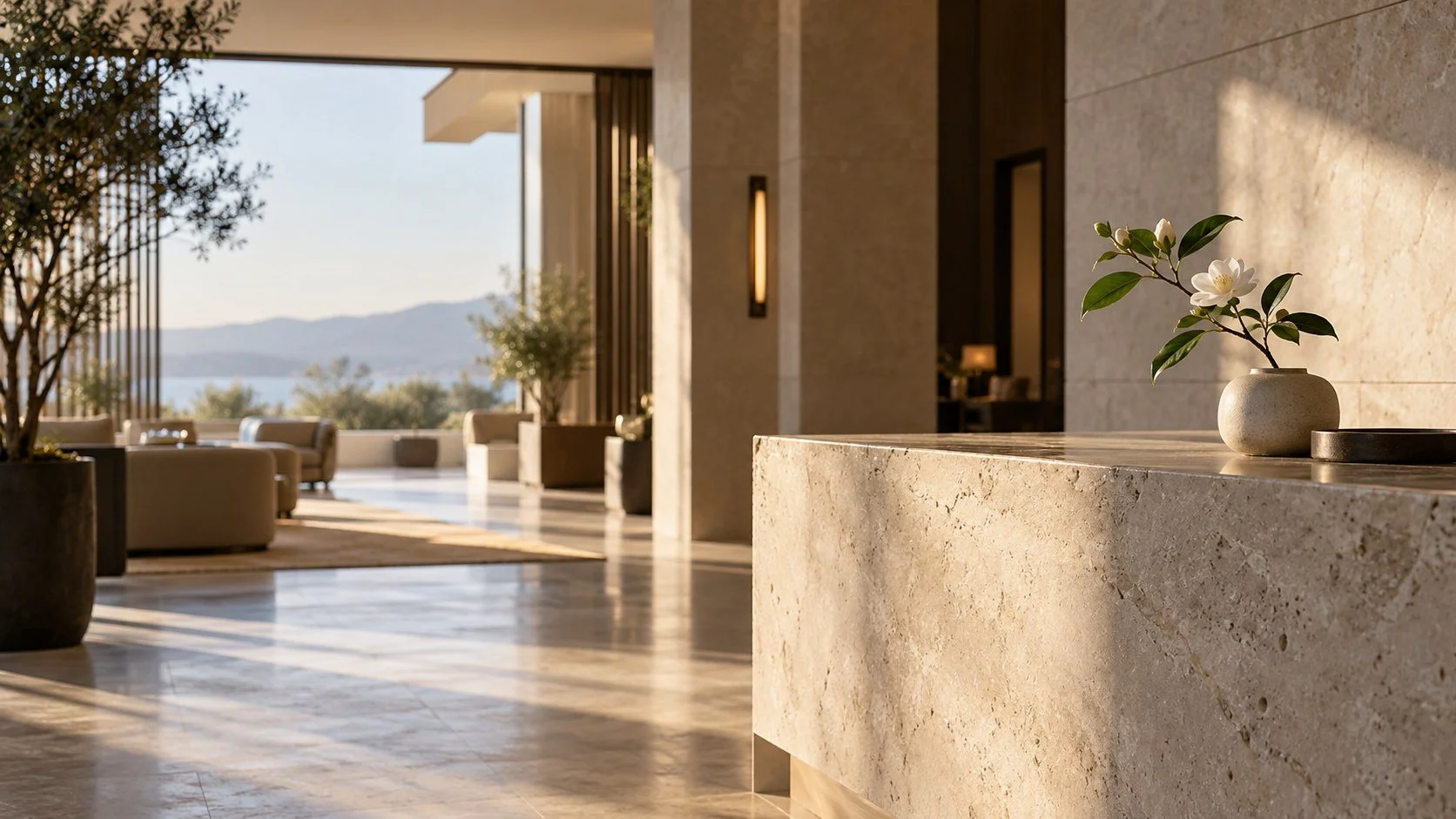
Original editorial illustration of an imagined hotel lobby. Not a Westin property.
Updated 20 October 2026.
A hotel can put its signature fragrance in the lobby and sell it for your living room. That is a coherent brand decision. Whether it changes what guests buy is a different question.
Westin's White Tea scent travels further than its hotels. Marriott sells a room spray described as the scent found in Westin hotels and resorts, alongside candles, diffusers and bath products. The arrangement makes sense: a familiar smell can connect the stay to a product at home. It also shows what a scent identity actually requires. Someone has to decide where the fragrance belongs, how it is delivered and whether it still feels like the same place when it leaves the lobby.
That is more interesting than the usual claim that scent slips past reason and makes customers spend. The evidence is patchier, and the design problem is better.
Recognition is possible. A guaranteed sales lift is not.
Smells can cue autobiographical memories, a subject examined in a review of the research. It does not follow that every branded fragrance will summon a vivid feeling, or that such a feeling produces loyalty. The story a brand tells itself about the air is often tidier than the experience of the people breathing it.
Retail experiments make the caution concrete. In a 2021 double-blind field study, 57 customers at one second-hand clothes shop encountered fresh linen, vanilla sandalwood or the shop's ordinary smell. Spending in the fresh-linen condition was nearly double that of the comparison conditions. The researchers saw a possible connection between a smell associated with clean clothes and the goods on sale. It is a striking result from a small, specific setting, not a number that can be applied to a hotel, a museum or a high-street chain.
A 31-day randomised trial in a Canadian bookshop and café found no evidence that a chocolate scent affected sales. Another field study in three bookshops found that thematically matched ambient smells did not increase sales of the corresponding magazines. Charles Spence's review of ambient scent in built environments also describes mixed results when smell is combined with other sensory cues. A supplier's favourite positive study is a starting point for questions, not a forecast.
Make the scent answer to the place
Westin's example works as a brand system because the same named fragrance appears in hotel and home products. That does not prove how an individual guest feels about it. The useful design question is whether the smell fits the service and the materials people encounter. Fresh linen in a second-hand clothes shop at least has a plausible relationship to cleanliness. An expensive scent with no relationship to the room can feel like an unrelated advertisement.
Start with the existing environment. A bakery, timber workshop or flower shop already has an olfactory identity; masking it may discard the most credible thing about the place. A hotel lobby, meanwhile, is shared space. The strength of the scent, the location of a diffuser and the ventilation matter as much as the formula. The scent should survive a normal visit without turning every corridor into a test of endurance.
There is no single correct intensity for every guest. People differ in what they notice, enjoy or can tolerate. A quiet option, clear way to report discomfort and a plan to turn the system down are part of the design, not embarrassing exceptions to it. The International Fragrance Association's standards address particular ingredients and intended uses; a supplier's compliance certificate does not answer whether a fragrance is suitable for every occupied space or visitor.
Brief it like a service, then test it
A useful brief states the role scent should play. Is it meant to make a property recognisable across locations, support a specific product experience, or remove an unpleasant background smell? Those are different jobs. Ask the supplier to show how the proposed fragrance relates to the brand, what ingredients and delivery method it uses, where it will be installed, and who controls intensity and maintenance. The practical details decide whether the idea survives beyond a presentation.
Then test the experience in the actual space. Let staff and visitors describe it in their own words; include people who dislike fragrance. Compare their responses with an unscented period, and record any change in complaints as well as whatever commercial measure was set in advance. A trial cannot prove every long-term effect, but it can catch the obvious mismatch before a brand buys diffusers for a whole estate. A branding agency should be able to explain what would count as failure.
Scent is a legitimate design material, especially for a place people revisit. It deserves the same scrutiny as lighting, sound and signage. The strongest case for it is a considered experience that people recognise and are comfortable occupying. The weakest is a graph promising that a pleasant smell will do the work of a better service.